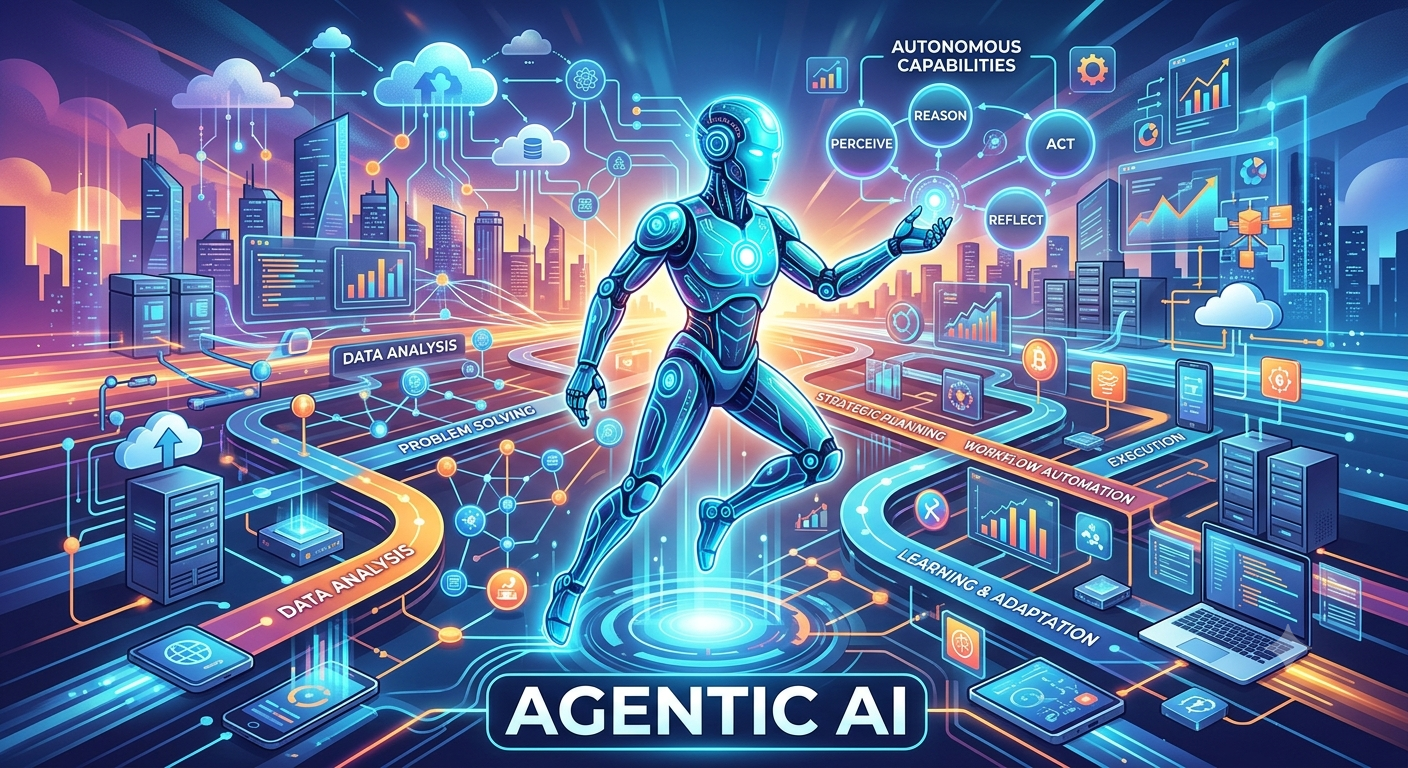
Agentic AI: AI Is No Longer Just Answering You 🤖
Agentic AI: The Next Big Step in Artificial Intelligence
AI has moved far beyond simply answering questions. Today, we are seeing a new shift toward Agentic AI—systems that can understand a goal, plan steps, use tools, and take action with less human intervention.
What is Agentic AI?
In simple words, Agentic AI is AI that can work toward a goal instead of just responding to a prompt.
For example, a normal AI might tell you how to plan a trip. An AI agent could potentially research destinations, compare options, create an itinerary, and adjust the plan according to your budget.
The basic idea is:
- Traditional AI: You ask → AI answers.
- Agentic AI: You give a goal → AI plans → AI acts → AI checks → AI adjusts.
Agentic AI vs Generative AI
Generative AI mainly focuses on creating content, such as text, images, or code. Agentic AI focuses more on completing tasks.
For example, Generative AI can write code for a website. An AI agent could potentially work through a larger task—creating files, testing the code, finding errors, and making improvements.
They are not completely separate technologies. Generative AI models can actually be used as the "brain" of an AI agent.
Where is Agentic AI Being Used?
AI agents are being explored in many areas, including:
- Software development – coding, testing, and debugging
- Research – collecting and organizing information
- Customer support – handling customer requests
- Business – automating repetitive workflows
- Personal assistants – managing tasks, schedules, and information
Why Does It Matter?
The biggest change is the shift from “AI that gives answers” to “AI that helps complete work.”
However, Agentic AI is not perfect. AI can still make mistakes, misunderstand instructions, or take an incorrect action. That's why human supervision, security, and proper permissions are important.
What Does the Future Look Like?
Agentic AI could change how we interact with computers. Instead of manually using multiple applications for every task, we may increasingly give an AI a goal and let it coordinate the necessary tools.
The future of AI may not just be about getting better answers. It may be about getting more things done.